The Road — my last single revisited

Probably my last ever single… And as unsuccessful as all the others!

https://davidaharley576.substack.com/p/the-road

I bade farewell to the life of the wandering professional musician in the 1970s, so my song The Road [link to the .WAV on Bandcamp, in case you feel like buying it!] is definitely not autobiographical, so I think of it as a story that also happens to be a song. Still, it might have described my life had I not gone in a very different direction. Released as a single, but the recording of this particular version originally came about because I was working up a solo set for the Lafrowda festival in 2023. You don’t have to buy it to listen to it. Of course, you don’t have to listen to it either, but it is one of my better efforts.

The guitar was a Taylor T5Z, which generally works well for fingerstyle because of its unusual pickup configuration. I’m not sure I could play it this well, now.

lyric

It’s late and the driver has nothing to say
One more stop ahead
On an endless highway
One more place to be, and nowhere to stay
For the road was the ruin of me
The tour bus, the tranny,
The fluffed chords of fame
The days in the airport, the runaway train
You don’t care for my songs
And you don’t know my name
For the road was the ruin of me

I was never a drifter, I’d no urge to roam
But somehow the tour bus
Became my home
The scenery fades
And the scene is long gone
And the road was the ruin of me
The smoke and the pipe dream,
The whisky, the beer
There’s nothing to treasure
And nothing to fear
There’s no one here now
To send out for some gear
And the road was the ruin of me

The call of the wild,
And the song of the road
The end of the game
And the call of the void
There’s no one to meet
And there’s nowhere to hide
The road was the ruin of me
The heroes and villains,
The bait and the switch
The hole in my sock
And the travelling itch
I’ll never be famous,
I’ll never be rich
For the road was the ruin of me

I drank much too deep at the wishing well
I knew what I wanted but never could tell
Now I’ve only these dreams
And these few words to sell
For the road was the ruin of me
All that I’ve learned is how little I know
All I’ve come home to is a new place to go
And it’s never a place that I wanted to be
For the road was the ruin of me

released August 28, 2023
Words and music, Guitar and vocal, by David A. Harley.

Notes

Here are some additional notes originally published in my book Hands of the Craftsman (slightly edited here).

I strongly suspect that if I’d persisted in trying to play music for a living, the road might well have been the ruin of me. And while my own biographical timeline is very different, I’m not unfamiliar with the psychology of a thwarted career in music.

In a way, this is my American Pie – I’m not saying it’s as good as Don MacLean’s song! – in its bizarre (and possibly pretentious) range of cultural references, from Jack London to director John Baxter, from Brian Wilson to Freud and Poe, from Cormac McCarthy to Kerouac, from Vernon Dalhart to Megan Henwood, from the long con to dermatology. Not that anyone is going to care about that, and why should they? Tracking the references should probably be left as an exercise for the reader, but here are a few footnotes anyway. Anyone would think this was a conference paper… (No, I don’t plan on doing any more of those.)

  • “…send out for some gear…” I hasten to point out that my own career in music was drug-free, apart from too many cigarettes early on (I gave them up several decades ago), and an unhealthy reliance on beer as an antidote to stage fright. Alas, that hasn’t changed except that I can’t really drink beer any more.
  • Jack London wrote The Call of the Wild, of course, but his autobiographical John Barleycorn and the concept of ‘White Logic’ certainly have a bearing on the culture of the road, as musicians often know it.
  • One of John Baxter’s films was The Song of the Road, which casts its own light on work and technology. I probably wasn’t thinking of Whitman’s rather more optimistic Song of the Open Road!
  • ‘The fluffed chords of fame’ is an oblique reference to a song by Phil Ochs, a superb songwriter who met a tragic end at his own hand after several very difficult years. (I might include my song For Phil Ochs here shortly.)
  • There are a number of songs called Endless Highway (notably one by Robbie Robertson, and another by Alison Krauss), as well as at least one album and a gospel group. I didn’t have any of them specifically in mind: the words just fitted the song.
  • There are several songs about runaway trains: I was thinking of the old Vernon Dalhart hit, but I’m not sure I can explain why or if it’s relevant.
  • ‘The call of the void’ or ‘L’appel du vide’ (incidentally the title of a rather fine song by Megan Henwood) is rather similar to what Poe called ‘the Imp of the Perverse’, a self-destructive impulse.
  • Heroes and Villains is a Beach Boys song, of course: a suitable reference in a song that could be said to contrast fact and mythology.
  • Bait and switch is a fraudulent sales technique, but it has other applications in the context of conning.
  • A travelling itch might refer to the itchy feet of the obsessive traveller, but also describes a particularly irritating condition where scratching at the site of an itch simply seems to result in its resurfacing, hydra-like, at another site. Even more irritatingly, I once wrote a half-decent story about this that I’ve somehow lost completely!

Some Housman settings on Substack

1. Epitaph on an Army of Mercenaries (remix)

A demo track — originally from an album of demo tracks that I may never be in a fit state to record properly. The raw guitar/vocal version was previously posted on Inspiration Point. However, this is a remix with some guitar and synth overdubbing that I quite like.

This 1917 poem by A.E. Housman takes longer to explain than it does to read.

It refers to the British Expeditionary Force, which German propagandists referred to as ‘mercenaries’ because at the outbreak of war, Britain’s army consisted of professional soldiers rather than conscripts or the later volunteers of ‘Kitchener’s Army‘. The BEF was practically wiped out by 1916.

A poem by Hugh MacDiarmid, ‘Another Epitaph on an Army of Mercenaries’ takes a very different view, regarding the BEF as ‘professional murderers’. I’m staying out of that debate. For now, anyway. This setting was originally intended for a suite of settings (including some Kipling) that was intended to lessen any residual jingoism. I’m still thinking about that one.

Words by A.E. Housman. Music, acoustic guitars, synth and vocal by me.

These, in the days when heaven was falling,
The hour when earth’s foundations fled,
Followed their mercenary calling
And took their wages and are dead.

Their shoulders held the sky suspended;
They stood, and the earth’s foundations stay;
What God abandoned, these defended,
And saved the sum of things for pay.

2. Severn Shore

A setting of Housman’s cheerful story of fratricide

I dreamed last night I was working on my ‘Tears of Morning’ album. Listening to it again, I probably should… Still, here’s my setting of A Shropshire Lad VIII from that album, which I’m fairly happy with. I thought Severn Shore was a slightly more attractive title.

‘FAREWELL to barn and stack and tree,
Farewell to Severn shore.
Terence, look your last at me,
For I come home no more.

‘The sun burns on the half-mown hill,
By now the blood is dried;
And Maurice amongst the hay lies still
And my knife is in his side.

‘My mother thinks us long away;
’Tis time the field were mown.
She had two sons at rising day,
To-night she ’ll be alone.

‘And here ’s a bloody hand to shake,
And oh, man, here ’s good-bye;
We ’ll sweat no more on scythe and rake,
My bloody hands and I.

‘I wish you strength to bring you pride,
And a love to keep you clean,
And I wish you luck, come Lammastide,
At racing on the green.

‘Long for me the rick will wait,
And long will wait the fold,
And long will stand the empty plate,
And dinner will be cold.’

3. On Bredon Hill (Summertime on Bredon)

A rerecording of my setting of the poem from Housman’s ‘A Shropshire Lad’. Still needs work, but I think the vocal has more character than the version previously recorded and released.

XXI – BREDON HILL

In summertime on Bredon
The bells they sound so clear;
Round both the shires they ring them
In steeples far and near,
A happy noise to hear.

Here of a Sunday morning
My love and I would lie,
And see the coloured counties,
And hear the larks so high
About us in the sky.

The bells would ring to call her
In valleys miles away:
“Come all to church, good people;
Good people, come and pray.”
But here my love would stay.

And I would turn and answer
Among the springing thyme,
“Oh, peal upon our wedding,
And we will hear the chime,
And come to church in time.”

But when the snows at Christmas
On Bredon top were strown,
My love rose up so early
And stole out unbeknown
And went to church alone.

They tolled the one bell only,
Groom there was none to see,
The mourners followed after,
And so to church went she,
And would not wait for me.

The bells they sound on Bredon
And still the steeples hum.
“Come all to church, good people,”–
Oh, noisy bells, be dumb;
I hear you, I will come.

Music by A.E. Housman. Melody, guitar and vocal by David Harley.

Probably more of these to come.

The Letitia Files

This is a collection of posts by or concerning the purely imaginary Ms Letitia Teaspoon, who ran a counselling service for the many irritating comment spammers who couldn’t resist posting to ESET’s WeLiveSecurity blog (and some of my personal blogs) when I was working with the company. Sadly, it turned out that comment spammers are impervious to satire, but I enjoyed writing the articles enough to rerun them as a series on my Substack (Un)Selective Symmetry. They’ve also appeared on Inspiration Point as a single post, but I thought I’d release the same post here as a free eBook in PDF format in case someone apart from Letitia wants their very own copy.

The Letitia Files

The Nightingale (Á La Claire Fontaine)

[Edited extract from my book So Sound You Sleep, recently posted to Substack]

This is a song reassembled from traditional sources, but so heavily restructured and freely translated that I can’t point to any single version as its prototype. I acquired a recording of it on my way back from a school trip abroad, and made my first pass at a translation when I still lived in the county (was still at school, probably.).

This is not, of course, related to the well-known nautical ballad The Nightingale, nor to any of numerous songs with similar titles such as The Sweet Nightingale. And yes, I know that Á La Claire Fontaine doesn’t mean ‘Nightingale’ – it means by a clear spring or fountain, literally. I simply chose to change the title to something that fits better with the translated version than with the best-known French version.

This was possibly originally a Jongleur song from the 15th or 16th century: the translation is based on French-Canadian versions. I was never quite happy with my original translation, and never sang it in public – if I sang it at all, it would have been in French. This version is much more recent than my unsatisfactory 1960s translation. The evolution of the World Wide Web during the interim enabled me to research the song’s origins much more easily, allowing me generate a version of the story that appealed to me more.

I’ve always liked one particular tune to this French song (also widely found in Belgium and Canada), but the words as I’d heard them have always seemed problematical to me, with the lover whining that he was unjustly discarded for being reluctant to give his lady a spray of roses. It’s hard to be too sympathetic toward a cheapskate, but the Wikipedia article linked below includes a version that doesn’t sound much different, but makes it clear that the singer is female, which sheds a very different light on the story.

When I found this and other versions where the protagonist was clearly female and the spray of roses symbolizes her maidenhead, it made much more sense, though it also makes it more difficult for me to sing it convincingly myself. (I have thought of attempting a male version that is nearer to the original sense, but that seems much more challenging.)

This is a rather free translation, picking up a possible interpretation that the lady lost out by giving in too easily, then being considered too ‘easy’ to marry.

C’est de mon ami Pierre, qui ne veut plus m’aimer,
Pour un bouton de rose, que j’ai trop tôt donné.

…my friend Peter is no longer in love with me
because I gave him my rosebud too soon…

Other versions suggest that she was dropped because she didn’t give in, as described below. As well as making my chosen subtext a little clearer, I’ve compressed the story by dropping a couple of very common lines referring to the protagonist bathing, as somehow that doesn’t seem to translate well. The song is often seen as a children’s song, but this particular take on the story should probably be considered a bit too explicit for that.

The version of the lyric on Wikipedia is closer to the version I originally learned, but a couple of small but very significant differences make it clear that the singer is female, rejected because she refused to give in to her suitor and let him take her ‘bouquet de roses’. The version I first learned included the misleading line “J’ai perdu ma maîtresse” (“I have lost my mistress…”) rather than “J’ai perdu mon ami” (“I have lost my [male] friend.”) The Wikipedia article includes a more-or-less literal translation. I’ve borrowed the best-known French refrain for the end of my recording: Il y a longtemps que je t’aime / Jamais je ne t’oublierai. A more literal translation of that chorus than I’ve used in translation would be “I have loved you for a long time, I will never forget you.”

Here’s a link to the track on Bandcamp.

[Music and original words traditional. Translated, arranged and adapted by David A. Harley. Guitar and vocal also by David A. Harley.]

The Nightingale Lyric

As I walked from my love’s wedding

By the spring where we once lay
From the top of a mighty oak tree
A songbird sang to me

It’s been so long that I’ve loved you
I never will love again

Sing, happy nightingale,
Sing, for your heart is light
Sing out your notes so merry
But all that I can do is cry

My love has wed another
Though I was not to blame
I gave to him my love too freely
Now someone wiser bears his name

Oh, how I wish that the rosebud
Still flourished on the vine
And that my false true lover
Still returned this love of mine

It’s been so long that I’ve loved you
I never will love again

Il y a longtemps que je t’aime
Jamais je ne t’oublierai

Substack Articles

You may be wondering what happened to that flurry of posts from earlier in the year…

The fact is, at the moment I’m concentrating on publishing my miscellaneous articles on Substack, mostly on my page (Un)Selective Symmetry. If you’re at all interested in what I’m writing about these days, you’re very welcome to take a look and even subscribe. (There’s no subscription fee.)

David Harley

Tea & Empathy

Previously posted on Substack.

I was reminded of this by an article in West Country Voices by Sarah Cowley. (Hat tip to Barbara Leonard for bringing it to my attention.) The article was a memory of the 1950s, of being taken in a coach party from a children’s home to an American air base for an Easter Egg hunt, each child being looked after by a volunteer ‘Auntie’. All of whom seem to have been young airmen – what would a 21st Century Republican make of that, I wonder?

I too was a child in the 50s, but I had no personal experience of meeting American servicemen at that time, though in later years my mother sometimes spoke of experiences during the war: her favourite, apart from stories of how she and Alan Turing won the war at Bletchley Park*, was of how she and her sister were walking in Shrewsbury and were approached by two GIs who suddenly made their excuses and left when they realized they were with their mother. When I was a child, my grandmother definitely ruled the roost with an iron tongue, so discretion was probably the greater part of valour.

Fast forward to the late 1970s. It was probably late in 1978, rather than Easter, and my (first) wife and I were somehow accompanying a party of pensioners to tea at an American air base somewhere near London. (No, I don’t remember which one, or quite how I came to be participating: it must have been some community venture that she was part of.)

While American military presence had been drastically reduced after the war, the escalation of the Cold War (and de Gaulle’s decision to loosen ties with NATO and evict Allied military presence from French soil) had resulted in a dramatic expansion of USAFE (United States Air Forces in Europe) presence in the UK from the late 60s. But I guess the public disquiet with the presence of American armaments and deteriorating relations with the USSR had not yet taken hold to the extent that they did later. Especially when the peace camps were established at Upper Heyford in 1982, and even more so at Greenham Common** in 1981, following the deployment of Gryphon cruise missiles there.

On this occasion, however, it seems that the US military was enjoying good relations with the (fairly) locals. At any rate, the MPs at the gate were quite relaxed about letting the coach through, and a good time was had by all. A lady whose name I recall as Dolly, in particular, was the life and soul of the tea party. Though at this point I only recall one direct quote, we seem to have learned quite a lot about her. The quote? Well, when there were volunteers helping with the washing up, she drew attention to one of us – possibly me, but I really don’t remember – and remarked that “I do like to see a man working!”

Hard to imagine such a ‘hands across the water’ gesture from the frankly UK-hating (largely) Trump government. (Only money speaks to money across the waters.) Unless it was organized by a far-right Trump-adoring group like Reform UK.

At any rate, this very extroverted lady somehow became associated in my mind with the eventual lyric to the song ‘The Weekends’ from my album The Game of London. It’s a Marmite song: some people love it, some quite aggressively dislike it. After being roundly criticized for singing a ‘dirge’ on a couple of occasions, I stopped singing it in public. I bet you can’t wait to hear it now! Somehow as the song developed, the backstory got darker. Which is fine by me: I’ve certainly known old people who were far more miserable than this, and one or two of them crept into the background of the story.

Originally, I sang it to the traditional tune associated with the ballad Dives and Lazarus (among other songs), which may have contributed to the dislike some people took to it: that’s a slow, minor tune. When I decided that I was going to record it again in the 2020s, I decided to customize the tune a little more, and did the Ewan MacColl thing of starting from a traditional tune – actually, two – and playing with it/them until they were something quite different. (Does that make me a folksinger??? I hope not…)

The first tune is the rather sprightlier (but still minor) Musselburgh Fair: the second is a variation on part of the Dives and Lazarus tune. I suspect that it’s still a Marmite song, but I don’t sing it (or anything else, actually) in public any more, so I’m practically immune to criticism.

The Weekends (are the Worst) (Bandcamp link: you don’t have to buy it to hear it.)

The world has changed since I was born in 1902.
Two World Wars have swept away the world that we once knew:
Two brothers and three sisters , long dead and gone to earth
Our lives were often hard, but now the weekends are the worst.

My old man died just 20 years past.
His health was never good since the Kaiser had him gassed,
But in the end it was cancer that carried him off so fast
I miss him all the time, and the weekends are the worst.

You might say I was lucky, though we never had much cash,
But we had 50-odd good years, more than I’d dare to ask.
I brought up three lovely kids, though another died at birth:
I miss them all a lot, and the weekends are the worst.

I’ve a son in Melbourne, he’s been there since ’62:
I’ve never seen his wife or kids, just a snapshot or two.
My eldest died in the last lot, on a convoy to Murmansk:
It still brings tears to my eyes, and the weekends are the worst.

I’ve a daughter in Glasgow: she writes when she has time,
But that’s a long way off, and I’ve not seen her for a while.
She’s got a son in the army, just been posted to Belfast:
We worry all the time, and the weekends are the worst.

My friends are mostly dead, or else they’ve moved like me
When the street I was brought up in was pulled down in ’63.
Sixty years I’d lived there, child, girl and wife:
Sheltered housing’s not so bad but it can be a lonely life.
Especially since Jim died: we weren’t too bad at first
But now I’m on my own the weekends are the worst.

There’s the club once a week, though it’s just from seven till nine,
And since my fall they only fetch me down from time to time.
There’s my knitting and the TV, for what that might be worth,
But I miss the company, and the weekends are the worst.

*My mother was apt in her later years to remember things that hadn’t actually happened, or if they had, had happened to someone else, and also had an impish sense of humour, so I suppose I’ll never know for sure whether she was actually at Bletchley Park or what she did there. If she actually had a role in code-breaking, I’m afraid I didn’t inherit her code-breaking abilities. Despite a reasonably successful career in IT security, cryptology is one of my weaker areas.

**Somewhat ironically, my partner after my first marriage broke up (later my second wife) stayed at the Greenham Common peace camp at least once that I remember.

Moonflow instrumental

Posted to a new Substack section, imaginatively called Wheal Alice Music.

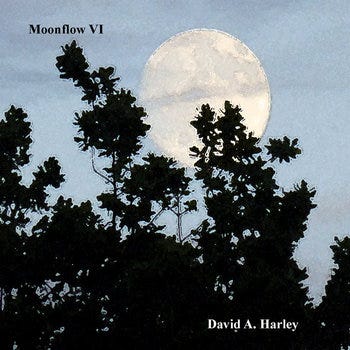
My instrumental Moonflow was written and recorded in Ludlow, using Garageband on a MacBook. Originally it was a short, improvised introduction to a recording of Bert Jansch’s Needle of Death. Later, I thought the instrumental introduction was interesting enough to stand as a tune in its own right. (And I’m not at all biased.) That recording hasn’t been released commercially, by the way.

The acoustic guitar that comprises the first section is actually the entire improvised introduction to Bert’s song. The second and third sections are the same section, but electronically tweaked and with overdubbed instruments.

This is the version that was released as a single. It also got a mention in my book So Sound You Sleep. If it matters, acoustic guitar was a Gibson J160E, the slide guitar was a Gretsch Bobtail round-neck resonator guitar, and the electric guitar was a Variax Standard impersonating a Coral Sitar and then (if I remember correctly – it was quite a few years ago and I didn’t make a note at the time!) a Rickenbacker 370. And if it doesn’t matter, feel free to disregard the previous sentence.

Recording:

Acoustic, resonator and electric guitars by David Harley.