
Revisiting on Substack my translation/reconstruction of what was probably originally a Jongleur song from the 15th or 16th century.
Category: books
Thomas Anderson – the eBook
This is a free eBook in PDF format about (mostly) my research into the death of Thomas Anderson in 1752. Anderson was the subject of an article for the Shrewsbury Folk Club magazine by the late Ron Nurse, which was the starting point for a song of mine that I’ve written about several times since, notably in my book So Sound You Sleep. Eventually that chapter became a series of articles for my Substack (Un)Selective Symmetry, and is now a short book in its own right. It also includes as appendices a couple of later songs with a tenuous connection to Kingsland, where Anderson was executed.

Here’s the table of contents, just to give you the flavour.
Contents
Thomas Anderson………………………………………………1
Thomas Anderson…………………………………………..5
Thomas Anderson lyric ……………………………………7
Thomas Anderson Recording……………………………9
Historical Background……………………………………11
A Load of Cobblers (and Tanners and
Leatherworkers) ……………………………………….13
From the Guilds to the Flower Show ……………14
From House of Industry to Shrewsbury School
……………………………………………………………….18
The Arbour and the Old Show …………………….20
Death of a Rebel ……………………………………….25
Sources and References……………………………..30
Church Street and St. Alkmund’s…………………32
St Mary’s Church……………………………………….35
Admiral Benbow ……………………………………….35
Katherine Mary Harley……………………………….36
Robert Cadman…………………………………………38
Appendix 1: Black Velvet …………………………………..40
Appendix 2: from the Shropshire Gazetteer…………48
Appendix 3: Goose and Common ……………………….50
Goose And Common lyric ………………………………52
Another (later) version ………………………………….53
The Inclosure Acts…………………………………………54
Kingsland……………………………………………………..55
Harley’s Stone………………………………………………58
Goosed by The Commons………………………………61
Appendix 4: Jack in the Box ……………………………….63
Ida Gandy…………………………………………………….65
Lyric and Tune Links………………………………………66
A Bastille Soupçon ………………………………………..68
About David Harley…………………………………………..71
The Letitia Files

This is a collection of posts by or concerning the purely imaginary Ms Letitia Teaspoon, who ran a counselling service for the many irritating comment spammers who couldn’t resist posting to ESET’s WeLiveSecurity blog (and some of my personal blogs) when I was working with the company. Sadly, it turned out that comment spammers are impervious to satire, but I enjoyed writing the articles enough to rerun them as a series on my Substack (Un)Selective Symmetry. They’ve also appeared on Inspiration Point as a single post, but I thought I’d release the same post here as a free eBook in PDF format in case someone apart from Letitia wants their very own copy.
The Nightingale (Á La Claire Fontaine)
[Edited extract from my book So Sound You Sleep, recently posted to Substack]
This is a song reassembled from traditional sources, but so heavily restructured and freely translated that I can’t point to any single version as its prototype. I acquired a recording of it on my way back from a school trip abroad, and made my first pass at a translation when I still lived in the county (was still at school, probably.).
This is not, of course, related to the well-known nautical ballad The Nightingale, nor to any of numerous songs with similar titles such as The Sweet Nightingale. And yes, I know that Á La Claire Fontaine doesn’t mean ‘Nightingale’ – it means by a clear spring or fountain, literally. I simply chose to change the title to something that fits better with the translated version than with the best-known French version.
This was possibly originally a Jongleur song from the 15th or 16th century: the translation is based on French-Canadian versions. I was never quite happy with my original translation, and never sang it in public – if I sang it at all, it would have been in French. This version is much more recent than my unsatisfactory 1960s translation. The evolution of the World Wide Web during the interim enabled me to research the song’s origins much more easily, allowing me generate a version of the story that appealed to me more.
I’ve always liked one particular tune to this French song (also widely found in Belgium and Canada), but the words as I’d heard them have always seemed problematical to me, with the lover whining that he was unjustly discarded for being reluctant to give his lady a spray of roses. It’s hard to be too sympathetic toward a cheapskate, but the Wikipedia article linked below includes a version that doesn’t sound much different, but makes it clear that the singer is female, which sheds a very different light on the story.
When I found this and other versions where the protagonist was clearly female and the spray of roses symbolizes her maidenhead, it made much more sense, though it also makes it more difficult for me to sing it convincingly myself. (I have thought of attempting a male version that is nearer to the original sense, but that seems much more challenging.)
This is a rather free translation, picking up a possible interpretation that the lady lost out by giving in too easily, then being considered too ‘easy’ to marry.
C’est de mon ami Pierre, qui ne veut plus m’aimer,
Pour un bouton de rose, que j’ai trop tôt donné.
…my friend Peter is no longer in love with me
because I gave him my rosebud too soon…
Other versions suggest that she was dropped because she didn’t give in, as described below. As well as making my chosen subtext a little clearer, I’ve compressed the story by dropping a couple of very common lines referring to the protagonist bathing, as somehow that doesn’t seem to translate well. The song is often seen as a children’s song, but this particular take on the story should probably be considered a bit too explicit for that.
The version of the lyric on Wikipedia is closer to the version I originally learned, but a couple of small but very significant differences make it clear that the singer is female, rejected because she refused to give in to her suitor and let him take her ‘bouquet de roses’. The version I first learned included the misleading line “J’ai perdu ma maîtresse” (“I have lost my mistress…”) rather than “J’ai perdu mon ami” (“I have lost my [male] friend.”) The Wikipedia article includes a more-or-less literal translation. I’ve borrowed the best-known French refrain for the end of my recording: Il y a longtemps que je t’aime / Jamais je ne t’oublierai. A more literal translation of that chorus than I’ve used in translation would be “I have loved you for a long time, I will never forget you.”
Here’s a link to the track on Bandcamp.
[Music and original words traditional. Translated, arranged and adapted by David A. Harley. Guitar and vocal also by David A. Harley.]
The Nightingale Lyric
As I walked from my love’s wedding
By the spring where we once lay
From the top of a mighty oak tree
A songbird sang to me
It’s been so long that I’ve loved you
I never will love again
Sing, happy nightingale,
Sing, for your heart is light
Sing out your notes so merry
But all that I can do is cry
My love has wed another
Though I was not to blame
I gave to him my love too freely
Now someone wiser bears his name
Oh, how I wish that the rosebud
Still flourished on the vine
And that my false true lover
Still returned this love of mine
It’s been so long that I’ve loved you
I never will love againIl y a longtemps que je t’aime
Jamais je ne t’oublierai
Wrekin – the other Nashville tuning demo
‘Wrekin‘ is a song I wrote several years ago that happens to demonstrate some of the tonal possibilities of Nashville tuning/stringing in a second guitar part.
By way of supporting a forthcoming article on Nashville tuning for a folk magazine, which I’ll flag here when it appears.
In the meantime, I did write a short book on the topic…
Song of Chivalry – Nashville tuning demo
Posted to Substack: a music link associated with a forthcoming article on Nashville tuning, on which I wrote a book a while ago.
It demonstrates one way in which the technique can be used.
British Library: Sound & Vision
Some years ago, I was contacted on behalf of the British Library to ask if I’d be willing to contribute some or all of my recorded songs to the Sound & Vision collection. I was, of course, happy to do this, and forwarded sound files as albums were released, until I stopped getting a response as the files were offered for transfer. Eventually I realized that this must have been because of the serious ransomware attack carried out against the Library in 2023.
Seeing a reference to the Sound & Vision catalogue today, I took the opportunity to see whether any of my work had become available again to BL reader’s pass holders. Well, a couple of my books apparently are in the Interim Catalogue, though I didn’t have the patience to check through all the Harley-related references for work specific to me rather than all the various David Harleys et al listed there. (It’s extraordinary how many of us there are…) But it seems that the Sounds catalogue is not yet available, though it may be restored sometime this year.
To be honest, I probably won’t get to hear when and if my music does become available again. I don’t have a Reader’s Pass because they only allow access to archived material to visitors in person, and London and Yorkshire a both a long trip from where I live. So if you really want to see what music of mine is still around, for the moment your best bet is still Bandcamp. Though given the present state of the world, who knows how long that will still apply?
David Harley
Cornish Writers interview
As mentioned earlier, I’m now registered with the Cornish Writers web site, complete with bio.
However, what I really like about the whole thing is doing this interview, which was a lot of fun. (Mostly, but your mileage may vary.)
David Harley reveals much more about himself and his writing than anyone will ever want to read.
Cornish Writers, now with added Harley
Bio added to Cornish Writers web site, as threatened in my last post.
Now I suppose I’ll have to add some books, at any rate some that are still available…
There may even be an interview in the near future.
I owe the format of the title of this article, by the way, to my friend and fellow author Marion Pitman.
David Harley
Books…
…not mine, on this occasion, but perhaps of more interest than mine to people with a Cornish connection.
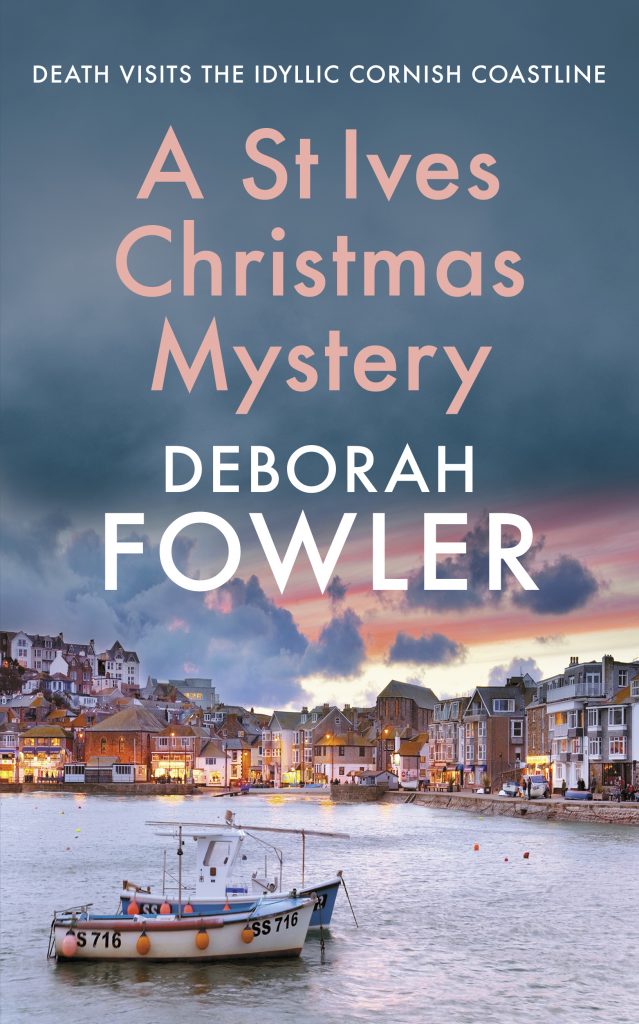
The first is a new novel – nine years after the last one! – by my neighbour (and Allison & Busby’s author of the month!) Deborah Fowler. I haven’t read it yet, as it’s not out till the 24th of October, but I expect it to be well up to the standard of her Felicity Paradise novels.
The second has been out for a while, but I’ve only just come across it, a very interesting collection of short stories by Cornish writers.
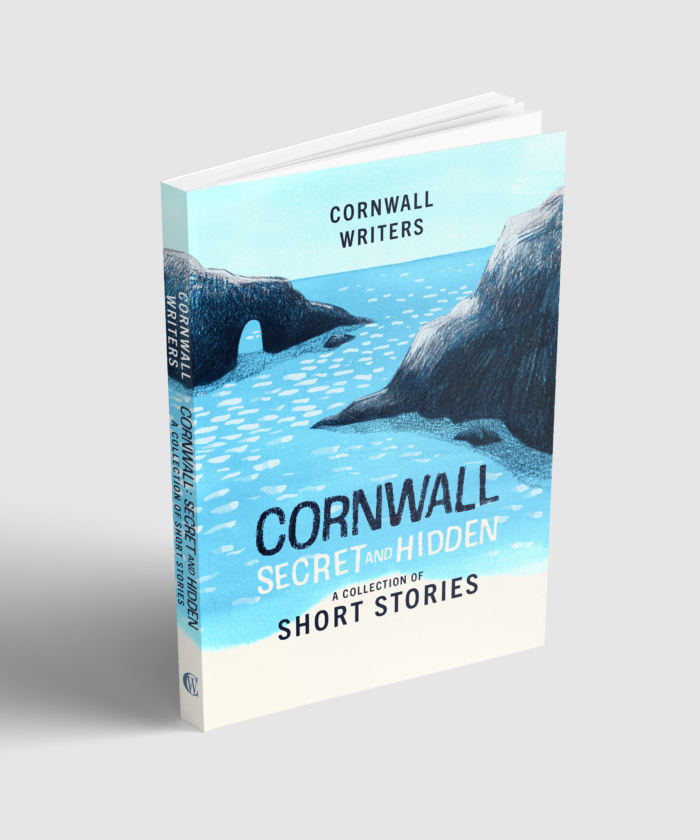
More information on the book here.
I shall certainly be following the Cornwall Writers site with keen interest in the future. Especially as I’m now registered with it! (More about that later, hopefully.)
 Wheal Alice Music