Keepsake Mill

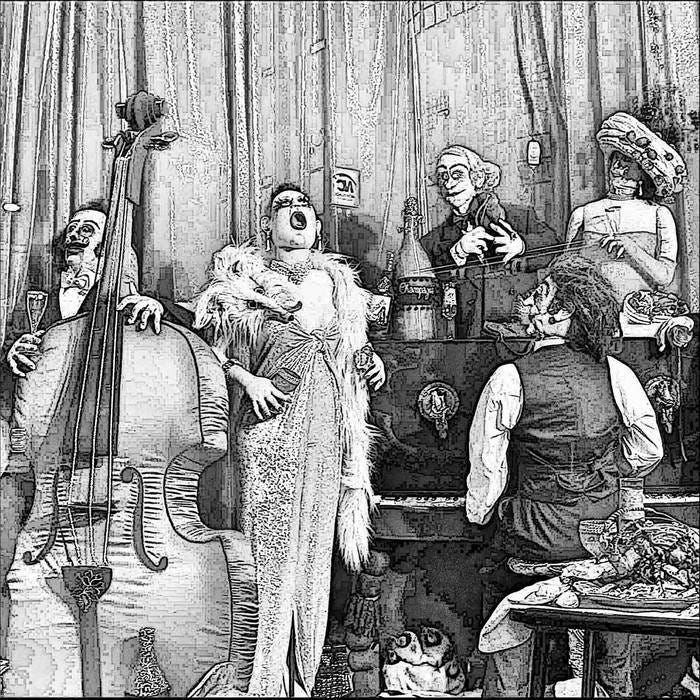
My setting of a poem by Robert Louis Stevenson. From the New Silver Jug Band’s first album Farewell Reunion. The poem is from ‘A Child’s Garden of Verses’.

Link on recording on Bandcamp (you don’t have to buy it to listen). Keepsake Mill

Over the borders, a sin without pardon,
Breaking the branches and crawling below,
Out through the breach in the wall of the garden,
Down by the banks of the river we go.

Here is a mill with the humming of thunder,
Here is the weir with the wonder of foam,
Here is the sluice with the race running under—
Marvellous places, though handy to home!

Sounds of the village grow stiller and stiller,
Stiller the note of the birds on the hill;
Dusty and dim are the eyes of the miller,
Deaf are his ears with the moil of the mill.

Years may go by, and the wheel in the river
Wheel as it wheels for us, children, to-day,
Wheel and keep roaring and foaming for ever
Long after all of the boys are away.

Home from the Indies and home from the ocean,
Heroes and soldiers we all will come home;
Still we shall find the old mill wheel in motion,
Turning and churning that river to foam.

You with the bean that I gave when we quarrelled,
I with your marble of Saturday last,
Honoured and old and all gaily apparelled,
Here we shall meet and remember the past.

Words by Robert Louis Stevenson: ‘Dublin Shop Window’ image, tune and vocal by David Harley. All instruments by David Harley and David Higgen.

The Nightingale (Á La Claire Fontaine)

[Edited extract from my book So Sound You Sleep, recently posted to Substack]

This is a song reassembled from traditional sources, but so heavily restructured and freely translated that I can’t point to any single version as its prototype. I acquired a recording of it on my way back from a school trip abroad, and made my first pass at a translation when I still lived in the county (was still at school, probably.).

This is not, of course, related to the well-known nautical ballad The Nightingale, nor to any of numerous songs with similar titles such as The Sweet Nightingale. And yes, I know that Á La Claire Fontaine doesn’t mean ‘Nightingale’ – it means by a clear spring or fountain, literally. I simply chose to change the title to something that fits better with the translated version than with the best-known French version.

This was possibly originally a Jongleur song from the 15th or 16th century: the translation is based on French-Canadian versions. I was never quite happy with my original translation, and never sang it in public – if I sang it at all, it would have been in French. This version is much more recent than my unsatisfactory 1960s translation. The evolution of the World Wide Web during the interim enabled me to research the song’s origins much more easily, allowing me generate a version of the story that appealed to me more.

I’ve always liked one particular tune to this French song (also widely found in Belgium and Canada), but the words as I’d heard them have always seemed problematical to me, with the lover whining that he was unjustly discarded for being reluctant to give his lady a spray of roses. It’s hard to be too sympathetic toward a cheapskate, but the Wikipedia article linked below includes a version that doesn’t sound much different, but makes it clear that the singer is female, which sheds a very different light on the story.

When I found this and other versions where the protagonist was clearly female and the spray of roses symbolizes her maidenhead, it made much more sense, though it also makes it more difficult for me to sing it convincingly myself. (I have thought of attempting a male version that is nearer to the original sense, but that seems much more challenging.)

This is a rather free translation, picking up a possible interpretation that the lady lost out by giving in too easily, then being considered too ‘easy’ to marry.

C’est de mon ami Pierre, qui ne veut plus m’aimer,
Pour un bouton de rose, que j’ai trop tôt donné.

…my friend Peter is no longer in love with me
because I gave him my rosebud too soon…

Other versions suggest that she was dropped because she didn’t give in, as described below. As well as making my chosen subtext a little clearer, I’ve compressed the story by dropping a couple of very common lines referring to the protagonist bathing, as somehow that doesn’t seem to translate well. The song is often seen as a children’s song, but this particular take on the story should probably be considered a bit too explicit for that.

The version of the lyric on Wikipedia is closer to the version I originally learned, but a couple of small but very significant differences make it clear that the singer is female, rejected because she refused to give in to her suitor and let him take her ‘bouquet de roses’. The version I first learned included the misleading line “J’ai perdu ma maîtresse” (“I have lost my mistress…”) rather than “J’ai perdu mon ami” (“I have lost my [male] friend.”) The Wikipedia article includes a more-or-less literal translation. I’ve borrowed the best-known French refrain for the end of my recording: Il y a longtemps que je t’aime / Jamais je ne t’oublierai. A more literal translation of that chorus than I’ve used in translation would be “I have loved you for a long time, I will never forget you.”

Here’s a link to the track on Bandcamp.

[Music and original words traditional. Translated, arranged and adapted by David A. Harley. Guitar and vocal also by David A. Harley.]

The Nightingale Lyric

As I walked from my love’s wedding

By the spring where we once lay
From the top of a mighty oak tree
A songbird sang to me

It’s been so long that I’ve loved you
I never will love again

Sing, happy nightingale,
Sing, for your heart is light
Sing out your notes so merry
But all that I can do is cry

My love has wed another
Though I was not to blame
I gave to him my love too freely
Now someone wiser bears his name

Oh, how I wish that the rosebud
Still flourished on the vine
And that my false true lover
Still returned this love of mine

It’s been so long that I’ve loved you
I never will love again

Il y a longtemps que je t’aime
Jamais je ne t’oublierai

Tea & Empathy

Previously posted on Substack.

I was reminded of this by an article in West Country Voices by Sarah Cowley. (Hat tip to Barbara Leonard for bringing it to my attention.) The article was a memory of the 1950s, of being taken in a coach party from a children’s home to an American air base for an Easter Egg hunt, each child being looked after by a volunteer ‘Auntie’. All of whom seem to have been young airmen – what would a 21st Century Republican make of that, I wonder?

I too was a child in the 50s, but I had no personal experience of meeting American servicemen at that time, though in later years my mother sometimes spoke of experiences during the war: her favourite, apart from stories of how she and Alan Turing won the war at Bletchley Park*, was of how she and her sister were walking in Shrewsbury and were approached by two GIs who suddenly made their excuses and left when they realized they were with their mother. When I was a child, my grandmother definitely ruled the roost with an iron tongue, so discretion was probably the greater part of valour.

Fast forward to the late 1970s. It was probably late in 1978, rather than Easter, and my (first) wife and I were somehow accompanying a party of pensioners to tea at an American air base somewhere near London. (No, I don’t remember which one, or quite how I came to be participating: it must have been some community venture that she was part of.)

While American military presence had been drastically reduced after the war, the escalation of the Cold War (and de Gaulle’s decision to loosen ties with NATO and evict Allied military presence from French soil) had resulted in a dramatic expansion of USAFE (United States Air Forces in Europe) presence in the UK from the late 60s. But I guess the public disquiet with the presence of American armaments and deteriorating relations with the USSR had not yet taken hold to the extent that they did later. Especially when the peace camps were established at Upper Heyford in 1982, and even more so at Greenham Common** in 1981, following the deployment of Gryphon cruise missiles there.

On this occasion, however, it seems that the US military was enjoying good relations with the (fairly) locals. At any rate, the MPs at the gate were quite relaxed about letting the coach through, and a good time was had by all. A lady whose name I recall as Dolly, in particular, was the life and soul of the tea party. Though at this point I only recall one direct quote, we seem to have learned quite a lot about her. The quote? Well, when there were volunteers helping with the washing up, she drew attention to one of us – possibly me, but I really don’t remember – and remarked that “I do like to see a man working!”

Hard to imagine such a ‘hands across the water’ gesture from the frankly UK-hating (largely) Trump government. (Only money speaks to money across the waters.) Unless it was organized by a far-right Trump-adoring group like Reform UK.

At any rate, this very extroverted lady somehow became associated in my mind with the eventual lyric to the song ‘The Weekends’ from my album The Game of London. It’s a Marmite song: some people love it, some quite aggressively dislike it. After being roundly criticized for singing a ‘dirge’ on a couple of occasions, I stopped singing it in public. I bet you can’t wait to hear it now! Somehow as the song developed, the backstory got darker. Which is fine by me: I’ve certainly known old people who were far more miserable than this, and one or two of them crept into the background of the story.

Originally, I sang it to the traditional tune associated with the ballad Dives and Lazarus (among other songs), which may have contributed to the dislike some people took to it: that’s a slow, minor tune. When I decided that I was going to record it again in the 2020s, I decided to customize the tune a little more, and did the Ewan MacColl thing of starting from a traditional tune – actually, two – and playing with it/them until they were something quite different. (Does that make me a folksinger??? I hope not…)

The first tune is the rather sprightlier (but still minor) Musselburgh Fair: the second is a variation on part of the Dives and Lazarus tune. I suspect that it’s still a Marmite song, but I don’t sing it (or anything else, actually) in public any more, so I’m practically immune to criticism.

The Weekends (are the Worst) (Bandcamp link: you don’t have to buy it to hear it.)

The world has changed since I was born in 1902.
Two World Wars have swept away the world that we once knew:
Two brothers and three sisters , long dead and gone to earth
Our lives were often hard, but now the weekends are the worst.

My old man died just 20 years past.
His health was never good since the Kaiser had him gassed,
But in the end it was cancer that carried him off so fast
I miss him all the time, and the weekends are the worst.

You might say I was lucky, though we never had much cash,
But we had 50-odd good years, more than I’d dare to ask.
I brought up three lovely kids, though another died at birth:
I miss them all a lot, and the weekends are the worst.

I’ve a son in Melbourne, he’s been there since ’62:
I’ve never seen his wife or kids, just a snapshot or two.
My eldest died in the last lot, on a convoy to Murmansk:
It still brings tears to my eyes, and the weekends are the worst.

I’ve a daughter in Glasgow: she writes when she has time,
But that’s a long way off, and I’ve not seen her for a while.
She’s got a son in the army, just been posted to Belfast:
We worry all the time, and the weekends are the worst.

My friends are mostly dead, or else they’ve moved like me
When the street I was brought up in was pulled down in ’63.
Sixty years I’d lived there, child, girl and wife:
Sheltered housing’s not so bad but it can be a lonely life.
Especially since Jim died: we weren’t too bad at first
But now I’m on my own the weekends are the worst.

There’s the club once a week, though it’s just from seven till nine,
And since my fall they only fetch me down from time to time.
There’s my knitting and the TV, for what that might be worth,
But I miss the company, and the weekends are the worst.

*My mother was apt in her later years to remember things that hadn’t actually happened, or if they had, had happened to someone else, and also had an impish sense of humour, so I suppose I’ll never know for sure whether she was actually at Bletchley Park or what she did there. If she actually had a role in code-breaking, I’m afraid I didn’t inherit her code-breaking abilities. Despite a reasonably successful career in IT security, cryptology is one of my weaker areas.

**Somewhat ironically, my partner after my first marriage broke up (later my second wife) stayed at the Greenham Common peace camp at least once that I remember.

Top 70 blues music blogs

I received an email a few days ago telling me that this blog – or, at any rate, the blues category – features in the top 70 blues music blogs on something called Feedspot. After politely messaging the sender to say thanks, I mentioned the site here.

Today, however, I received an almost identical message. I don’t care to deal with spammers, so I’m no longer giving the link. Digging deeper, I found this. (See the 4th scam listed.) I have no intention of being associated in any way with this site or its badge, and I certainly don’t recommend it.

And, even worse, I found this.

David Harley

British Library: Sound & Vision

Some years ago, I was contacted on behalf of the British Library to ask if I’d be willing to contribute some or all of my recorded songs to the Sound & Vision collection. I was, of course, happy to do this, and forwarded sound files as albums were released, until I stopped getting a response as the files were offered for transfer. Eventually I realized that this must have been because of the serious ransomware attack carried out against the Library in 2023.

Seeing a reference to the Sound & Vision catalogue today, I took the opportunity to see whether any of my work had become available again to BL reader’s pass holders. Well, a couple of my books apparently are in the Interim Catalogue, though I didn’t have the patience to check through all the Harley-related references for work specific to me rather than all the various David Harleys et al listed there. (It’s extraordinary how many of us there are…) But it seems that the Sounds catalogue is not yet available, though it may be restored sometime this year.

To be honest, I probably won’t get to hear when and if my music does become available again. I don’t have a Reader’s Pass because they only allow access to archived material to visitors in person, and London and Yorkshire a both a long trip from where I live. So if you really want to see what music of mine is still around, for the moment your best bet is still Bandcamp. Though given the present state of the world, who knows how long that will still apply?

David Harley

Night Terrors

Revisiting ‘The Little Drummer Girl’ a few days ago was an uncomfortable experience, given recent events in the Middle East, though it’s a decent example of Le Carré’s writing skills. Immediately afterwards, I got much more pleasure out of reading ‘Terry Pratchett – a Life with Footnotes’ and thinking for at least 15 seconds that I might attempt an autobiography. However, I eventually decided that I’d rather read Pratchett’s biography than mine, despite the sadness that clouded his final years. Still, there have been some moments of joy in my own life that I wouldn’t swap for anyone else’s memories. (I wonder if you know who you are!)

Yes, there’ll probably be a tune for this sooner or later: I don’t think it’s great poetry.

Sometimes I lie awake,
Cataloguing my mistakes,
Catastrophizing in the night:
Caught up in night terrors
Review comedies of errors: 
The ones I sometimes call my life.
And yet there've been sweet dreams
Among the nightmares and the screams,
Good love and good music on the way.
I've tried to keep to the Highway Code,
And though I'm running out of road,
I hope there aren't too many fines to pay.

New Album – ‘Farewell Reunion’

By David Harley, Dave Higgen, and Nancy Higgen, masquerading as the New Prize Silver Jug Band.

There’s a certain amount of genre hopping here, but no actual jug band music.  Come to that, no brass/silver band either. Next time, maybe.

Back at the end of the 60s at college in North Wales, Dave and I, among others (including Sally Goddard, better known more recently as part of the Canadian band ‘Atlantic Union’, and Paul Dunderdale, last heard of teaching music on the Isle of Man) occasionally gigged under a name that cheekily parodied that of  a local silver band. When Dave and I started (via the wonders of internet connectivity) to record together, it seemed appropriate to resurrect the name (but dropping the name of the real silver band!)

Farewell Reunion (name taken from one of Dave’s songs) is currently available only from Bandcamp, though it may get streamed at some point. No hurry for that, since it’s unlikely that any of us will live long enough to make the threshold for payment from Spotify etc…

Dave Higgen: engineering and production; bass, drums/percussion, keys, guitars, vocals**, any instruments unaccounted for.

David Harley: octave mandola, most of the guitars and impersonation of other things with strings (but not the harp), vocals*.

Nancy Higgen: vocal on ‘Mad as the Mist and Snow’***

Here’s the tracklist. You don’t have to buy anything to listen to tracks.

  1. Anywhere (Harley)*
  2. Summer (Higgen-Harley)**
  3. Old White Lightning (Harley)*
  4. Bourgeois Domesticity (Higgen)**
  5. A Rainy Day Blues (Harley)*
  6. Mad as the Mist and Snow (W.B. Yeats-Higgen)***
  7. Who Do You Think You Are? (Harley)*
  8. Alone (Higgen)**
  9. Hannah (Upcountry) (Harley)*
  10. Ugly (Higgen)**
  11. Keepsake Mill (Robert Louis Stevenson-Harley)*
  12. Farewell Reunion (Higgen)**
  13. Paper City (Slight Return) (Harley-Higgen)*
  14. Lachaise (Higgen-Harley)*

Little-Minded Britain

My country right or wrong? I don’t think so.

Buller, buller, buller” is reportedly the Bullingdon Club rallying cry with which Boris Johnson greeted fellow ex-members before the reputation of the club became so toxic that even he claimed to regret it.

“Little Britain” is less a reference to a TV show that I’ve never actually seen than to the myth of “plucky little Britain” standing alone against its enemies during two World Wars.

Thames House and Vauxhall Cross are the headquarters of MI5 and MI6 respectively. I don’t believe that either organization is unequivocally evil, but clearly both are tainted by political pragmatisim. Sanctions against Russia since the invasion of Ukraine have been selective, and the UK government is even more selective when it comes to criticizing the activities of political allies.

I prefer not to go into detail about the unspeakable far-right agitators and politicians, or the so-called patriots who seized upon the deaths of innocent children in Southport as an excuse for rioting and looting.

‘Perfidious Albion’ is a term that’s been used to describe Britain’s duplicitous political behaviour at least as far back as the 19th century.

Anyway, I’m too old and feeble to be much of an activist nowadays, but at least I can still vent my spleen in song. At least, I don’t think it’s illegal yet, though another four years of Tory repression might have changed that.

This song was finished today, so it’s obviously an imperfect performance (and one word has already been changed since this recording). ‘Castles’ is now ‘apartments’.

Or:

Little-Minded Britain

The flags are out in Downing Street to show that we’re the best

The Buller Buller Bullies take it all, and sod the rest

The greedy ones unmasked in the corridors of power

Still claim they’re just like us, in their apartments and their towers

Please don’t make me live in Little Britain

With the bullies and the liars without shame

I don’t want to end my days with those who say that it’s OK

To spit on anyone who’s not like them

Thames House is taking tea, and so is Vauxhall Cross

With the traitors and the ones who pull their strings

The oligarchs still thrive, money still has the last word

Whichever way the pendulum swings

Don’t make me live in Little-Minded Britain

Where the racists pose as patriots and devils pose as saints

Please don’t let me die in Little Britain

Among the hopeless victims of the rage that knows no shame

Don’t make me live in Little-minded Britain

Albion still perfidious is no safe place to be

Please don’t let me die in Little Britain

This is no place to meet eternity