Some Housman settings on Substack

1. Epitaph on an Army of Mercenaries (remix)

A demo track — originally from an album of demo tracks that I may never be in a fit state to record properly. The raw guitar/vocal version was previously posted on Inspiration Point. However, this is a remix with some guitar and synth overdubbing that I quite like.

This 1917 poem by A.E. Housman takes longer to explain than it does to read.

It refers to the British Expeditionary Force, which German propagandists referred to as ‘mercenaries’ because at the outbreak of war, Britain’s army consisted of professional soldiers rather than conscripts or the later volunteers of ‘Kitchener’s Army‘. The BEF was practically wiped out by 1916.

A poem by Hugh MacDiarmid, ‘Another Epitaph on an Army of Mercenaries’ takes a very different view, regarding the BEF as ‘professional murderers’. I’m staying out of that debate. For now, anyway. This setting was originally intended for a suite of settings (including some Kipling) that was intended to lessen any residual jingoism. I’m still thinking about that one.

Words by A.E. Housman. Music, acoustic guitars, synth and vocal by me.

These, in the days when heaven was falling,
The hour when earth’s foundations fled,
Followed their mercenary calling
And took their wages and are dead.

Their shoulders held the sky suspended;
They stood, and the earth’s foundations stay;
What God abandoned, these defended,
And saved the sum of things for pay.

2. Severn Shore

A setting of Housman’s cheerful story of fratricide

I dreamed last night I was working on my ‘Tears of Morning’ album. Listening to it again, I probably should… Still, here’s my setting of A Shropshire Lad VIII from that album, which I’m fairly happy with. I thought Severn Shore was a slightly more attractive title.

‘FAREWELL to barn and stack and tree,
Farewell to Severn shore.
Terence, look your last at me,
For I come home no more.

‘The sun burns on the half-mown hill,
By now the blood is dried;
And Maurice amongst the hay lies still
And my knife is in his side.

‘My mother thinks us long away;
’Tis time the field were mown.
She had two sons at rising day,
To-night she ’ll be alone.

‘And here ’s a bloody hand to shake,
And oh, man, here ’s good-bye;
We ’ll sweat no more on scythe and rake,
My bloody hands and I.

‘I wish you strength to bring you pride,
And a love to keep you clean,
And I wish you luck, come Lammastide,
At racing on the green.

‘Long for me the rick will wait,
And long will wait the fold,
And long will stand the empty plate,
And dinner will be cold.’

3. On Bredon Hill (Summertime on Bredon)

A rerecording of my setting of the poem from Housman’s ‘A Shropshire Lad’. Still needs work, but I think the vocal has more character than the version previously recorded and released.

XXI – BREDON HILL

In summertime on Bredon
The bells they sound so clear;
Round both the shires they ring them
In steeples far and near,
A happy noise to hear.

Here of a Sunday morning
My love and I would lie,
And see the coloured counties,
And hear the larks so high
About us in the sky.

The bells would ring to call her
In valleys miles away:
“Come all to church, good people;
Good people, come and pray.”
But here my love would stay.

And I would turn and answer
Among the springing thyme,
“Oh, peal upon our wedding,
And we will hear the chime,
And come to church in time.”

But when the snows at Christmas
On Bredon top were strown,
My love rose up so early
And stole out unbeknown
And went to church alone.

They tolled the one bell only,
Groom there was none to see,
The mourners followed after,
And so to church went she,
And would not wait for me.

The bells they sound on Bredon
And still the steeples hum.
“Come all to church, good people,”–
Oh, noisy bells, be dumb;
I hear you, I will come.

Music by A.E. Housman. Melody, guitar and vocal by David Harley.

Probably more of these to come.
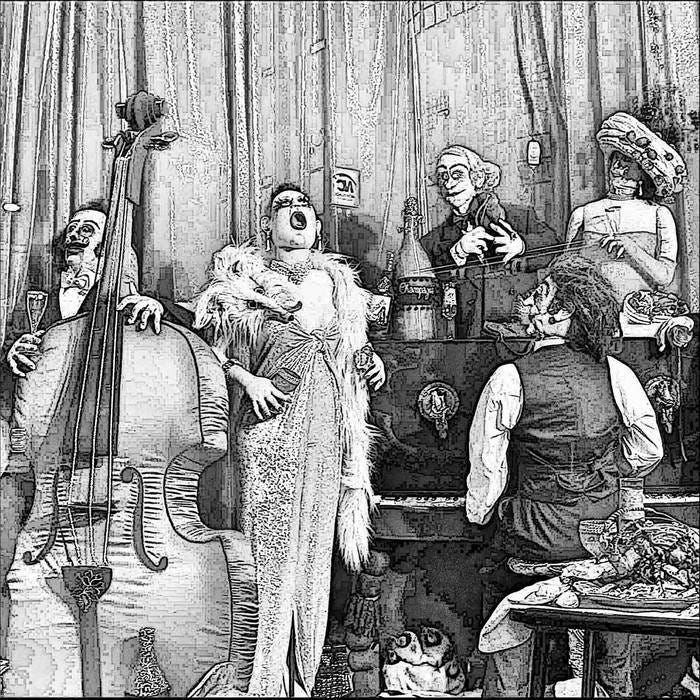
Keepsake Mill

My setting of a poem by Robert Louis Stevenson. From the New Silver Jug Band’s first album Farewell Reunion. The poem is from ‘A Child’s Garden of Verses’.

Link on recording on Bandcamp (you don’t have to buy it to listen). Keepsake Mill

Over the borders, a sin without pardon,
Breaking the branches and crawling below,
Out through the breach in the wall of the garden,
Down by the banks of the river we go.

Here is a mill with the humming of thunder,
Here is the weir with the wonder of foam,
Here is the sluice with the race running under—
Marvellous places, though handy to home!

Sounds of the village grow stiller and stiller,
Stiller the note of the birds on the hill;
Dusty and dim are the eyes of the miller,
Deaf are his ears with the moil of the mill.

Years may go by, and the wheel in the river
Wheel as it wheels for us, children, to-day,
Wheel and keep roaring and foaming for ever
Long after all of the boys are away.

Home from the Indies and home from the ocean,
Heroes and soldiers we all will come home;
Still we shall find the old mill wheel in motion,
Turning and churning that river to foam.

You with the bean that I gave when we quarrelled,
I with your marble of Saturday last,
Honoured and old and all gaily apparelled,
Here we shall meet and remember the past.

Words by Robert Louis Stevenson: ‘Dublin Shop Window’ image, tune and vocal by David Harley. All instruments by David Harley and David Higgen.

New Album – ‘Farewell Reunion’

By David Harley, Dave Higgen, and Nancy Higgen, masquerading as the New Prize Silver Jug Band.

There’s a certain amount of genre hopping here, but no actual jug band music.  Come to that, no brass/silver band either. Next time, maybe.

Back at the end of the 60s at college in North Wales, Dave and I, among others (including Sally Goddard, better known more recently as part of the Canadian band ‘Atlantic Union’, and Paul Dunderdale, last heard of teaching music on the Isle of Man) occasionally gigged under a name that cheekily parodied that of  a local silver band. When Dave and I started (via the wonders of internet connectivity) to record together, it seemed appropriate to resurrect the name (but dropping the name of the real silver band!)

Farewell Reunion (name taken from one of Dave’s songs) is currently available only from Bandcamp, though it may get streamed at some point. No hurry for that, since it’s unlikely that any of us will live long enough to make the threshold for payment from Spotify etc…

Dave Higgen: engineering and production; bass, drums/percussion, keys, guitars, vocals**, any instruments unaccounted for.

David Harley: octave mandola, most of the guitars and impersonation of other things with strings (but not the harp), vocals*.

Nancy Higgen: vocal on ‘Mad as the Mist and Snow’***

Here’s the tracklist. You don’t have to buy anything to listen to tracks.

  1. Anywhere (Harley)*
  2. Summer (Higgen-Harley)**
  3. Old White Lightning (Harley)*
  4. Bourgeois Domesticity (Higgen)**
  5. A Rainy Day Blues (Harley)*
  6. Mad as the Mist and Snow (W.B. Yeats-Higgen)***
  7. Who Do You Think You Are? (Harley)*
  8. Alone (Higgen)**
  9. Hannah (Upcountry) (Harley)*
  10. Ugly (Higgen)**
  11. Keepsake Mill (Robert Louis Stevenson-Harley)*
  12. Farewell Reunion (Higgen)**
  13. Paper City (Slight Return) (Harley-Higgen)*
  14. Lachaise (Higgen-Harley)*

The Carpenter’s Son / Carpentry

In the 1970s, I put a tune to Housman’s poem The Carpenter’s Son. Not that I did much with it at the time. Much more recently, revisiting my Housman settings (probably as a result of having moved to Ludlow), I recorded a version that included some fairly ambitious (for me) guitar, then went further and recorded an instrumental version called Carpentry with additional instruments overdubbed. (Bouzouki and mountain dulcimer.)

This remix combines a more recent acoustic guitar and vocal version with part of the instrumental version appended. Whether it’s a good idea remains to be decided. 🙂

Backup version:

Brookland Voices

Working on my setting for Housman’s poem ‘Far In A Western Brookland’ I came up with an instrumental passage I really liked. I’m not sure it will fit in with the finished setting, but it certainly stands well on its own.

Acoustic guitar in DADGAD.

Backup:

Far In A Western Brookland

The lyric is from Housman’s ‘A Shropshire Lad’ (LII), the tune is mine. I only recently realized that I hadn’t put it on any of my blogs. It’s likely to reappear shortly on an album, though.

[Backup]

Far in a western brookland
That bred me long ago
The poplars stand and tremble
By pools I used to know.

There, in the windless night-time,
The wanderer, marvelling why,
Halts on the bridge to hearken
How soft the poplars sigh.

He hears: long since forgotten
In fields where I was known,
Here I lie down in London
And turn to rest alone.

There, by the starlit fences,
The wanderer halts and hears
My soul that lingers sighing
About the glimmering weirs.


The Wild Swans at Coole (revisited)

This was a rehearsal for a gig happening in July, to see if the song would sound OK on electric guitar instead of acoustic, to save me lugging multiple guitars. But I like the harp-like quality of the arpeggios so much I thought I’d try recording it that way. This was a Taylor T5Z using the under-fretboard humbucker and the body sensor (similar to but not the same as a transducer). My setting of a poem by William Butler Years. My tune has no resemblance to the reel of the same name.

Backup:

The trees are in their autumn beauty,
The woodland paths are dry,
Under the October twilight the water
Mirrors a still sky;
Upon the brimming water among the stones
Are nine-and-fifty swans.

The nineteenth autumn has come upon me
Since I first made my count;
I saw, before I had well finished,
All suddenly mount
And scatter wheeling in great broken rings
Upon their clamorous wings.

I have looked upon those brilliant creatures,
And now my heart is sore.
All’s changed since I, hearing at twilight,
The first time on this shore,
The bell-beat of their wings above my head,
Trod with a lighter tread.

Unwearied still, lover by lover,
They paddle in the cold
Companionable streams or climb the air;
Their hearts have not grown old;
Passion or conquest, wander where they will,
Attend upon them still.

But now they drift on the still water,
Mysterious, beautiful;
Among what rushes will they build,
By what lake’s edge or pool
Delight men’s eyes when I awake some day
To find they have flown away?

Epitaph on an Army of Mercenaries

From the forthcoming album, an expanded version of the Tears of Morning album to go with the upcoming book. I’ve recorded it before, but this version is heavily edited and remixed with copious synth.

This 1917 poem by Housman refers to the British Expeditionary Force, which German propagandists referred to as ‘mercenaries’ because at the outbreak of war, Britain’s army consisted of professional soldiers rather than conscripts or the later volunteers of ‘Kitchener’s Army‘. The BEF was practically wiped out by 1916. I find it hard to empathise with either Housman’s or Kipling’s imperialist sympathies, but the poem does have power. I hope my arrangement does it justice.

From ‘Last Poems’, by the way, not ‘A Shropshire Lad’.


Epitaph for an Army of Mercenaries revisited

I’ve taken a couple of passes at this setting of a Housman poem (from Last Poems). After I posted a version on one of my blogs, I came across an alternative version I’d forgotten. I didn’t like the vocal much (I never do, but I particularly didn’t like this one), but I did like the synth and guitars, so I did a little splicing and remixing (or is that slicing and dicing?). Coming back to it for a book and album project, I did some more radical slicing and dicing, and I like it much better now.

To be honest, I’m not altogether sure I feel positively about the poem, still less the ‘war to end all wars’, but the poem does have a certain power, without the naked imperialism of Kipling at his worst.

This 1917 poem refers to the British Expeditionary Force, which German propagandists referred to as ‘mercenaries’ because at the outbreak of war, Britain’s army consisted of professional soldiers rather than conscripts or the later volunteers of ‘Kitchener’s Army‘. The BEF was practically wiped out by 1916.

A poem by Hugh MacDiarmid, ‘Another Epitaph on an Army of Mercenaries’ takes a very different view, regarding the BEF as “professional murderers”. I’m not sure how I feel about that one, either. Armies may commit atrocities, but its governments that set the context.

These, in the day when heaven was falling,
The hour when earth’s foundations fled,
Followed their mercenary calling,
And took their wages, and are dead.

Their shoulders held the sky suspended;
They stood, and earth’s foundations stay;
What God abandoned, these defended,
And saved the sum of things for pay.

David Harley

The Goose and the Commons

This is based on an 18th century lyric protesting against the Inclosure Acts, usually called ‘The Goose And The Common’ or ‘They hang the man and flog the woman’. I put a tune to a version of that lyric some time ago, and it’s on my ‘Cold Iron‘ album. While the privatization of common and/or waste land is more or less a done deal, the underlying topic of those who govern doing so for their own benefit rather than that of the people still has a very contemporary resonance. The lyric below makes that link more explicit: I don’t know that the world needs it, but somehow it demanded to be written… I don’t know that I’ll perform it as a song, though, as I’m already performing the older version.

The law demands that we atone
When we sell things we do not own
Yet lets MPs and Lords so fine
To sell off what is yours and mine

The poor and stateless don’t escape
When they conspire the law to break
This must be so, but we all endure
Those who conspire to make the law

You and I do not escape the web
Of laws that profit from us, the plebs
But MPs and their cronies too
Use or ignore them as it suits

The law forbids both man and woman
To protest corruption in the Commons
And so we all will Justice lack
Till we can vote to take it back…

David Harley